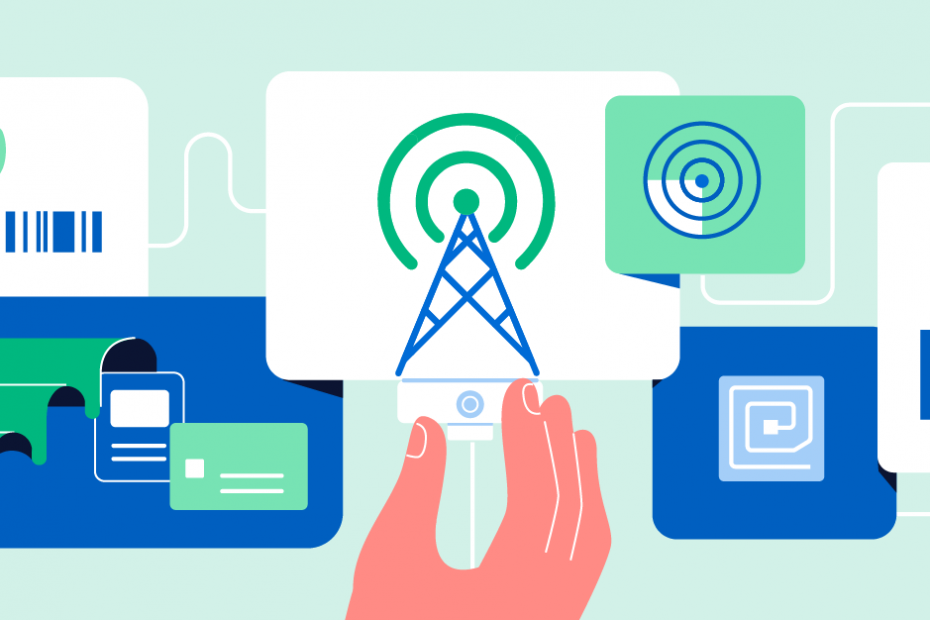
How does the Radio Waves Technology Help us Live Conveniently?

Have you ever wondered how the black and white stripes on the product in your hand could tell what that product is? Just having these stripes, we can know the...
The Internet of Things (IoT) is key to everything. The excitement it brings is revolutionary. First, with the advancement and convergence of technologies like sensors, AI, and cloud computing, we are approaching what we call a precision society.
Imagine an efficient society where we waste fewer and fewer resources. Imagine a world where everything works in extreme precision. We will know instantly who should take this job, see exactly how many hours this machine is used and when exactly it needs maintenance and be sure how many staff we need at this station in order to serve these exact numbers of customers.
A hospital will become one of the places where can gain the biggest benefit from this movement. Why? Because providing high-quality healthcare services is and will continue to be such a complex undertaking. The level of complexity that human’s brains cannot cope with. It will be vital to any hospitals to be able to handle the followings effectively and in real-time:
These are just examples of how we can bring “Optimization” to a hospital from a back-office’s point of view. For us optimization complements precision. And precision is a powerful concept to really utilize resources in hand to the level of optimum and reduce wastes. This is a really big market.
However, it is not as big as the next one.
We have lived in an ownership economy for so long. If we want something, we must buy that thing. Even though we use it just once a year, we have to buy it. A car is a prime example of this as research says we actually use our car just 5% of the time. The other 95% is a waste and the price to be an owner of a car is so high with gas, parking, maintenance and repair, insurance, and more. A business wants to sell products so much that it forces its customers to invest in a thing they actually don’t want.
Maybe just like we don’t want a car, but we want an on-demand transportation service. A customer doesn’t want our software they want to get their problems solved. Anyway, we convince, trick, lure them to “buy” what we want to sell without any guarantee if our products will solve their problems. The customer operates at their own risk. Have you ever heard of an abandoned-useless-expensive IT system that completely failed to deliver as promised? We bet you have. That is evidence of a cruel of the ownership economy.
But we are human, and human adapt. We learned about a decade ago that the ownership thing was a flaw. We then invented a new concept called a service economy, where we don’t sell the things, but we provide them instead. From a seller to become a provider. Sound better? The famous dialogue is “you don’t have to buy; you can rent or subscribe to our service instead.” Interesting. A customer doesn’t buy but they can rent and pay monthly or yearly fees. The ownership is gone. A customer invests less at first but pays gradually for equipment, software, and after-sales services. But is the service economy the best? The answer is unfortunately no with some clear reasons.
First, normally a customer has to pay based on the numbers of those things she needs. Be it the number of equipment, the number of software licenses, the number of service times per year. With all these, is there a guarantee she will get her problems solved? We don’t think so. There is a reason for that.
It is due to a conflict between the customer’s business model and the provider’s business model. While she may want to reduce overall operating costs and increase revenue, but the provider wants her to subscribe and gradually and continuously pay for a service that doesn’t relate to how she can achieve her goals.
Let’s assume that they are a medical equipment provider who lends some infusion pumps to the hospital. While she, as a managing director, wants to make sure she has just enough devices to run the medical services, but she has to pay by the numbers of infusion pumps she rents. If she rents 100 devices, she pays for the whole hundred even though she doesn’t use some of them, some are under-utilized, and some are under maintenance. Not to mention, she also has to pay for a service fee. Then look at how she really makes money. Only when an infusion pump is used with a real patient, then she makes money. The question is why does she need to pay for all unused devices? This is the conflict we are talking about.
But Internet of Things (IoT) that powers the precision society and optimization can change that for the better. The category we are creating can fuel an outcome economy, where a provider can align their business model with their customers’. This is very powerful. Consider the previous example, what if this provider gets rid of the concept of renting completely? What if this provider starts to act as a real provider who provides tangible values, results, and outcomes to the customers?
This is how it will look. They simply provide a set of infusion pumps for the hospital including a management software suite, and an after-sales service – free of charge. The way they make money is exactly the way the hospital makes money — by using an infusion pump with a real patient. They charge the customer a portion of the revenue the customer generates from charging the patient. This is an alignment that changes the game.
Because Internet of Things (IoT), precision, and optimization give them a lot of information and knowledge of what, where, when and how their devices are used. They can say to the customer that “Every hour of device usage, we would like to share $1 from your revenue.”
The hospital pays based on the outcome its managing director is seeking. The more infusion pumps get used, the more money the hospital can make, so can the provider.
The outcome economy is really big, and it will affect every industry we can possibly think of. And now, we are moving toward that promised land with our proprietary platform, which is built to fully embrace this revolution driven by Internet of Things (IoT).
Do you know we make about 35,000 decisions every day? What if 10% of the decisions are related to work and business. That’s 3,500 a day. The question is how many times those decisions you make are based on facts?
How many times do you feel confident about the decisions you are about to make? Or, you just speculate and use your past experience and instinct to guess the future.
Work becomes more complex everywhere especially those who provide physical services to customers. Rapid changes, more demand, higher expectations, coupled with greater competitions has made staying on top this almost impossible.
You fight with resource insufficiency, process inefficiency, operation bottlenecks, unpleasant experiences, frustrations, and wastes every single day. The battle that seems endless.
But, in spite of all the spreadsheets, reports, automation, data warehouse, BI, and ERP, you, as a leader, still don’t know what the best decision for this moment is.
Until Now
Introducing … Real-Time Story Optimization.
Where some see people, assets, tasks, processes, workflows, and tracking, we see stories — everywhere.
Stories by nature put people at the center.
Stories of your staff, managers, executives, and customers. Stories that are inherently unique and can make or break their day. Stories that are formed from instantaneous interactions of people, and things around them.
Stories that are crafted well by a series of the best decisions you make to create fulfillment and enjoyment in their memories.
We build a technology platform that collects, and aggregates overlooked information for you so that you can leverage them. We open up an opportunity for you to see hidden information you never knew existed. We convert a massive stream of digital and physical activities into actionable insights.
Ultimately, we help you craft and optimize the best stories. Everyday. In real-time.
We are on a quest to bring this idea to the healthcare industry. Why? Because we think this is the place we can make the most impact. If you spend 10 seconds thinking about what assets you see in a hospital, we are confident that you will be able to think of more than 10 of them — people, medicine, medical devices, medical supplies, surgical instrument, blood, specimen, beds, wheel chairs, vehicles, and linen. Did you know that:
This is what we are talking about — safety, frustrations, inefficient processes, losses, wastes in time and money.
At its heart, this industry is very unique. A hospital is the place where every day you can see and feel countless human interactions and relationships — between patients and patients, patients and doctors, many kinds of staff and their managers and peers. The list goes on. We see this as the biggest opportunity to help you improve their life through our work.
Every percentage increased in patient safety. Every minute and penny saved for both your patients and organization. Every moment of anxiety eliminated from their life. Every smile on their faces. Every act of generosity between human being. Those can become a reality by better decisions you make today and everyday. We at Mutrack are here to be a part of your story. The story of becoming a better decision maker to make life around you flourished. 🌻
The healthcare industry is growing Thailand is positioned to be a medical hub in ASEAN. Last year, we welcomed more than 3.5 million visits of foreign patients, treated more than 2 million local inpatients and served more than 50 million visits of outpatients making our country one of the world’s
The healthcare industry is growing Thailand is positioned to be a medical hub in ASEAN. Last year, we welcomed more than 3.5 million visits of foreign patients, treated more than 2 million local inpatients and served more than 50 million visits of outpatients making our country one of the world’s top medical destinations.
In 2020, there are in total 1,421 hospitals in Thailand, which 347 hospitals are private and 264 hospitals are medium-to-large size, along with other 9 new big hospital projects.
About the market of healthcare spending, it is forecasted to grow as high as to $32.2 billion US (1,027 billion THB) in 2020 to $47.9 billion US (1,528 billion THB) in 2026, at a CAGR of 6.6%. You can see how big the market is. The factors supporting this steady growth is the rise in ageing population, which aged 65 and over along with the increase in life expectancy that happens not only in Thailand but also in many countries around the world.
We can see that more and more people become self-aware of their health wellness. This supports steadily increasing demand in medical care services that not only increase hospitals’ profitability but also make them seek for new solutions and technologies to help improve their performances to serve the customers better.
Apart from the growth of healthcare spending, IoT in the healthcare sector is becoming a popular trend. It is expected to reach up to $12.6 billion US (401 billion THB) in Asia Pacific with a CAGR of 13.2% in 2020, showing an increase in the adoption of the emerging technologies such as AI robot-assisted surgery, workflow assistance, connected machines, and preliminary diagnosis, as well as the need for achieving greater and better healthcare service delivery for the customers from hospitals everywhere.
Although healthcare is growing, the challenges are there too.
First and foremost is the cost of medical services, highlighting the back-office operation which includes assets and staff. The back-end operation is considered to be the backbone of hospitals as it is essential to the customer experience and the service delivery. To manage the cost effectively and keep the cost down are very important in order to carry on the business.
The ineffective management of inventory and workflow of the asset can result in poor service delivery and increasing cost due to overstock and under-utilized assets. This can be related to the movable medical devices that are very high value; think of an infusion pump that can cost up to THB100,000. Although linen seems to be less in value, gathering together can cause large amounts of money and they are consumable, which means they must be replaced sooner or later.
Another important part is the people. Because our platform touches many parts of hospital operations, we have a chance to create a positive impact on so many people. Our platform can craft the best story every day. When it comes to people, what they have to deal with is about the operation and administration. The higher demand in medical care leads to a better operation process as it can directly affect the customer experience and expectation.
During this intense competition, the higher quality and value the hospitals can give to the customers, the higher chance they will come to you.
If you are working in the healthcare industry, you will see general challenges the hospitals are facing as well as the opportunities that are rising behind. Many hospitals across countries are encountering similar situations, just better or worse.
The challenges can be grouped into four new factors. New challenges, New information, New technology, and New expectations.
New challenges for hospitals are such as the increase in labor cost, resource shortage, and underutilized.
Labor represents about 60 percent of hospital costs which make many hospitals are under pressure to improve the service efficiency and at the same time reduce their healthcare costs. As the demand for medical services is increasing each year due to the increase in the aging population and longer life-span of people, the cost may also grow. The hospitals that couldn’t manage their expenditures well can be in a risky position. Using staff more efficiently and reducing staff turnover can be one of the solutions.
Another challenge occurring in many hospitals is resource shortage, staff for instance. This is forecasted to continuously rise in the future. Western countries are a clear example that they will run short of almost two million healthcare workers by 2020. Meanwhile, nursing and physicians are likely to be short of up to 600,000 and 230,000 workers, respectively. This makes hospitals look for new solutions to optimize their resources.
Underutilized assets are another big issue for hospitals. Normally one hospital bed requires up to eight mobile assets such as an infusion pump and oxygen cylinder and the number of assets is expected to increase every year. It was found that the average total value of devices used per bed is around THB62,700. Thus, a 300-bed hospital will have mobile assets that can cost at least THB18,800,000. You can now imagine how much cost the hospital has to bear. Underutilized assets can be caused from poor management whether manual process or lack of information. Thus, money can be saved from better use of underutilized assets.
New kind information can cause hospitals a trouble too. For instance, a lack of real-time information, lack of shared knowledge, and solution fragmentation.
Lack of real-time information is making healthcare workers’ jobs more difficult than necessary. A lack of access to real-time information affects the ability of not only the workers to perform their roles but also the managers to access the data to make better use and management of the resources. With the real-time information in place, they can get much more accurate and efficient data.
Knowledge sharing is also important at the workplace. When the information is updated and shared among the workers, they tend to work more effectively. Lack of knowledge sharing can reduce the capabilities to perform their routines, and it leads to a delay and mistake in services.
Solution fragmentation can be troublesome to the hospitals. Thinking about the workplace, each department usually has its own separate system which is disconnected to one another, which makes the access to the data and data sharing across departments more difficult if not impossible. This, most of the time, makes workflow operation slower and less effective.
New technology for hospitals is such as mobile and connected devices, Internet of Things (IoT), machine learning, data analytics, and telemedicine. The trend of investment in healthcare technologies is continuously rising. All of these exist for certain types of purposes. So, to select the right solutions is very important to give out the most effective and beneficial way for hospitals. Technology adoption is a must, not just nice-to-have.
New expectations for hospitals are such as frictionless processes, prompt access to information, and self-serve digital experience.
The way of operation in the hospitals has to continue improving. The quality of services needs to keep up to the standard or even better in order to outperform the others. Many processes that are operated manually have to change and develop to smooth processes, automatically and intelligently.
Information is everywhere. The problem is how to access the right and useful information to help better performance and how fast we can access the information. With the innovative technologies, IoT, connected devices, and data analytics, access to the efficient and reliable information can help up perform the workers. For instance, RTLS technologies solutions and voice-assistant devices
In the past, the digital experience could be accessible by a group of people. But, nowadays, everyone can enjoy it. This starts to slightly change the way we behave in numeral ways. This also affects the hospitals. Patients and customers do expect more and seamless digital experience. You can see patient experience is going more digital compared to the past whether digital check-in or smart devices to enhance the patient experience. This is also the same in the workplace. More and more hospital workers also expect to operate workflow digitally as well.
You might start to see the trends of hospitals that are changing. These new changes can give businesses new opportunities and spaces to play. What matters the most is how quickly you can see the hidden opportunities and fill in that gap.
I was sitting at my desk writing this article. Besides my laptop connecting to WiFi, I also had my phone beside me, my smartwatch on the left wrist, wireless headphones on my ears.
Writing is my habit and these items help me write smoothly. The devices need different technology for different communication purposes.
Why Bluetooth, WiFi, and sometimes 3G/4G/5G? Why can’t we choose one?
A lot of you might be curious. To answer this question, I will bring up a real-life story.
I was a bit thirsty when I was writing, so I got up and went to get some water with my headphones still on. First ten steps I could still hear the music connecting from my phone to my headphones clearly. Another 20 and 30 steps were still okay. But when 50 steps away, the music started to be missing. That’s because Bluetooth is the technology that could transmit only that far distance. And when I walked back closer to my desk (actually to my phone), closer to the source of the signal, I could then listen to the music again.
Not so long lunchtime came. I put off my headphones on the desk, took my phone, and went out to eat. I noticed that when I walked out, my phone could still detect WiFi. When I arrived at the parking lot, it was still okay. But when I walked to the front of another building, the WiFi signal was gone and the 3G/4G (or 5G) replaced. And that’s because WiFi can only go that far. 3G, 4G, and 5G cover more enormously which we could say, they cover the whole planet earth.
The first main difference of this technology is the signal coverage distance. Bluetooth’s is shorter than WiFi’s and WiFi’s is shorter than 3G, 4G, and 5G (We could say that it is a cellular signal wave).
Because the smartwatch and my wireless headphones are devices that should be close to a phone, so Bluetooth is used instead of WiFi.
But the question is when WiFi can send and receive information at a further distance, why don’t we just use WiFi? Why do we need to limit the distance and use Bluetooth?
When I am at home, I normally turn on a wireless speaker to listen to music (well, because you don’t have to care about anyone). This time my speaker was connecting to my computer via Bluetooth. I was doing my work for three hours with the music being played in the background nicely and smoothly.
It could be noticed here that all of my devices need the source of energy – no matter it is from being charged or using a battery. And in this case, my speaker worked long hours because of the battery and that’s also because Bluetooth uses less energy than WiFi. These days the low energy technology as known as ‘Bluetooth Low Energy’ – BLE has small usage of energy. It is so little that one small device can last several years with a coin battery.
How about WiFi? Firstly, every WiFi router at home does not use a battery. Each of them needs to be plugged in, right? That’s because WiFi uses a lot of energy.
Secondly, mobile phones and laptops have WiFi and use batteries too, many of you may ask. Yes, they can. They can because the batteries of these two devices are small but have a big capacity, they can support WiFi. Have you ever noticed when we turn an ‘Airplane Mode‘ on (Flight mode) and the WiFi is turned off and we travel for about ten hours but when we turn the phone on again, the battery doesn’t go down a bit? That’s because WiFi is not used.
Okay, we have come this far. Both Bluetooth and WiFi have advantages and disadvantages. So, which one should we use?
It was time to go home. I walked out of my office and headed to the train station. While walking there, I looked at my smartwatch to see how many steps I had walked that day. What I saw was the number of steps, the distance, the number of stairs, the heart rate, and the calories I had burned so far. Those were just small numbers that were sent to my smartwatch via Bluetooth – no photos nor moving pictures. That’s because Bluetooth has limitations in sending and receiving information.
When I arrived at the train, I took my phone out to watch some YouTube. For the first 5 minutes, everything was smooth. My phone which was connecting to the world via 3G was working in full force. But when it came to the most exciting scene, there was a delay! (ruining everything including the quality of the video and the sound). I looked up at the top of the phone, the 3G was on instead of 4G which 3G could send and receive less information than 4G. The 3G was trying to download the video but it couldn’t. So I decided to turn off the phone. When I went back home, my phone detected the WiFi. So I turned on YouTube again and wow, the quality of the video was in high definition, the sound was clear and smooth making my watching experience amazing!
In theory, WiFi can send and receive more information better than “Mobile Network Data”. Moreover, these days fiber optic plays an important role in improving better WiFi’s quality which there is no problem with WiFi at all. But guess what, since the emergence of 5G, now 5G has more download speed than WiFi in some countries. (Even though WiFi can penetrate better).
In conclusion, due to the bandwidth of sending and receiving information, Bluetooth has less capacity compared to 3G and 3G has less than WiFi.
The last factor that we have to consider is …
This one is very clear. Bluetooth is free which means I can use my smartwatch, my headphones, and my wireless speaker without paying for any services. All the devices connect to my phone directly to send and receive information. I don’t have to spend any money on the service provider. Everything is free!
But when we talk about Mobile Network Data, it is not free at all. Since the old period of 2G only had to send and receive sound and messages, we still had to pay for monthly service. Until now sound and messages are not quite popular as they used to be. People turned to focus more on access to the Internet which is called ‘Mobile Data’. So now it has become a trend for everyone to get a monthly service according to the capacity we want to use which is also various in prices.
____________________________
Now everybody including me is surrounded by the technology used for communication and various devices for different purposes. Some of them can work from a short distance but some of them can work from a far distance and cover more areas. Some of them can send and receive more information and some of them use low energy.
However, in the nearer future, challenges are there as well. Is it possible if we replace some disadvantages of one technology with some advantages of another technology to extend the technology abilities such as Smart City or Smart Farm? … The answer is it is possible and it already happened.
If you like to enjoy this kind of story, please come check on here often. We will make sure to share more interesting articles! 😁 #mutrack
Do you know we make about 35,000 decisions every day? What if 10% of the decisions are related to work and business. That’s 3,500 a day. The question is how many times those decisions you make are based on facts? How many times do you feel confident about the decisions you are about to make?